


Explore the Range Rover Hybrid Lineup
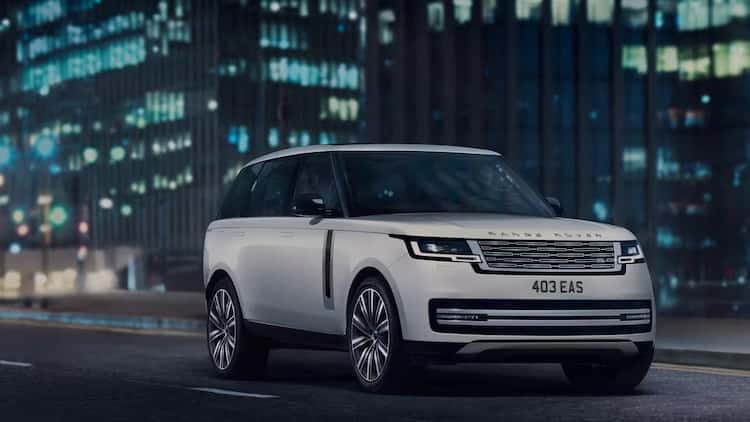
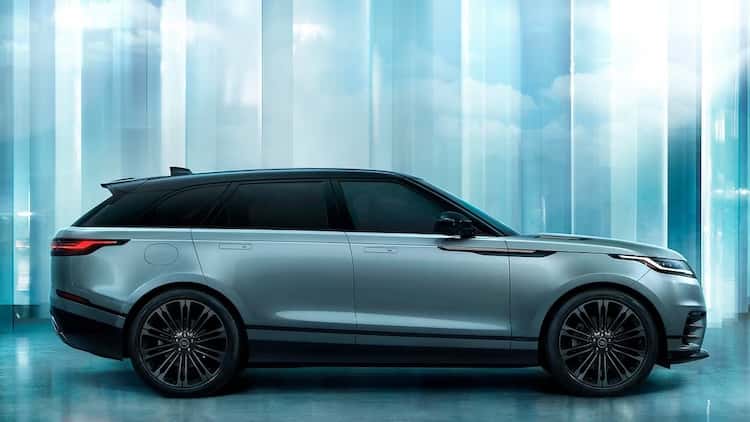
Photo Source/Copyright: RANGE ROVER
Ask three Range Rover drivers how their hybrid powertrain works, and you’ll likely get three completely different explanations. That confusion is understandable: Land Rover uses the word “hybrid” to describe two fundamentally distinct setups across its showroom floor.
Mild Hybrids: Frictionless Assist
At the entry level sit the mild hybrids (MHEVs). Available on trims like the Velar P400 and baseline six-cylinder Range Rover Sport versions, these vehicles never plug into a wall. Instead, a compact 48-volt battery and an integrated starter-generator harvest kinetic energy under braking.
- The role: Stored energy smooths out engine auto start-stop operation and supplies subtle low-end torque fill before the turbocharger spools up.
- The driving feel: It makes stop-and-go traffic exceptionally refined, though the inline-six engine still handles all actual propulsion.
- The limit: You can’t drive on battery power alone.
Plug-In Hybrids: Full Electric Vehicle (EV) Driving
For true electric operation, you have to look at the plug-in hybrids (PHEVs). Built on the MLA-Flex platform, the current lineup features the flagship Range Rover P550e alongside the Range Rover Sport in P460e and P550e trims. All three pair an underfloor 38.2 kilowatt-hour (kWh) battery with a 160-kilowatt (kW) electric motor and a 3.0-liter turbocharged Ingenium inline-six.
| Model / Trim | Total Output | EPA Electric Range | DC Fast Charge (0-80%) | Layout |
|---|---|---|---|---|
| Range Rover P550e | 542 hp | Up to 53 miles | Under 1 hour (50 kW) | Standard Wheelbase / 5 Seats |
| Range Rover Sport P460e | 454 hp | Up to 53 miles | Under 1 hour (50 kW) | Midsize / 5 Seats |
| Range Rover Sport P550e | 542 hp | Up to 53 miles | Under 1 hour (50 kW) | Midsize / 5 Seats |
Choosing between them comes down to personality. The full-size P550e isolates occupants with whisper-quiet, float-over-anything composure, while the Sport trims, particularly the P550e, sharpen throttle response and body control for drivers wanting a more agile chassis.
On paper, the EPA rates each variant at up to 53 miles of all-electric driving. In daily practice, typical errands, school runs, and commutes happen entirely without burning gasoline.
Crucially, unlike competing PHEVs whose engines ignite when merging onto highways or cranking the climate control, the Range Rover’s electric motor produces enough standalone muscle to sustain highway speeds unassisted.
Charging and Real-World Trade-Offs
Charging flexibility represents another major highlight. Most plug-in hybrids rely strictly on slower Level 2 AC connections, requiring several hours to recharge. Land Rover added 50 kW DC fast-charging capability, making quick sub-hour public top-ups genuinely practical.
Naturally, there are reasonable trade-offs to consider:
- Wheelbase restriction: Housing that heavy battery means the full-size P550e is offered exclusively in the standard-wheelbase, five-seat layout; the extended three-row option is off the table.
- Cargo height: The battery slightly raises the rear cargo floor, trimming a modest amount of vertical luggage volume.
- Preserved capability: Land Rover kept all off-road hardware, air suspension travel, and 35.4-inch water-wading capability intact.
Once the battery is spent on longer trips, the system operates like a traditional hybrid, delivering uninterrupted range without charging bottlenecks. For drivers ready to leave combustion behind entirely, Land Rover’s upcoming dual-motor, all-electric Range Rover waits on the horizon with an estimated 333 miles of range.
Until then, Land Rover’s PHEVs occupy an enviable sweet spot: silent, zero-tailpipe-emissions luxury all week, backed by effortless six-cylinder grand touring when the weekend calls.
More From Land Rover Akron
Find The Right Range Rover SUV Cost
Photo Source/Copyright: Edmunds Getting into a Range Rover isn’t a one-size-fits-all financial commitment. You can scrape the bottom of the barrel, relatively speaking, at just under fifty grand, or you can easily drop a quarter-million dollars on a bespoke luxury yacht built for the tarmac. Navigating the dealership lot can feel overwhelming if…
Compact vs. Subcompact Cars: Crucial Differences Explained
Photo Source/Copyright: Land Rover Curious about what exactly separates compact and subcompact cars? The primary difference between a compact and a subcompact car lies in their interior space, overall size, and passenger comfort. Subcompact cars provide exactly 85 to 99 cubic feet of total passenger and cargo space. They are smaller, more affordable, and…
Feel the Future in Land Rover Hybrid Cars
Have you ever felt the visceral silence of 500 horsepower waiting to break free? At Land Rover Akron, we’re witnessing a transformation that blends this electrified exhilaration with the rugged capability of the British countryside. We root ourselves deeply in the Akron community, where our dedicated Product Specialists and factory-trained Service and Parts departments exceed…